

- Angaben zum Versand
- 50 euro
- Artikelstandort
- Poznań, Polen
English
Japanese signature bass of L'Arc~en~Ciel's tetsuya – Edwards E-T-98EL, turn of the millennium, quilted maple and gold hardware
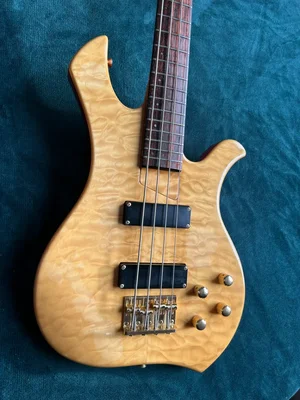
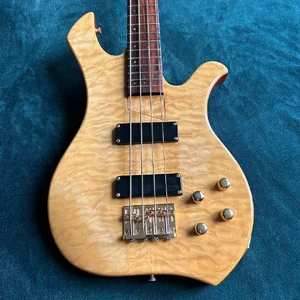
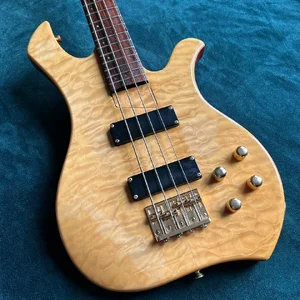
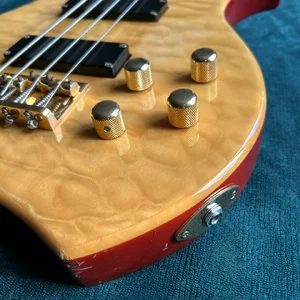
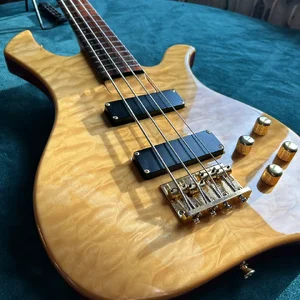
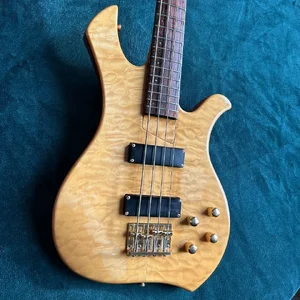
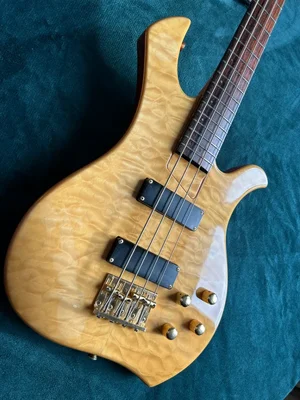
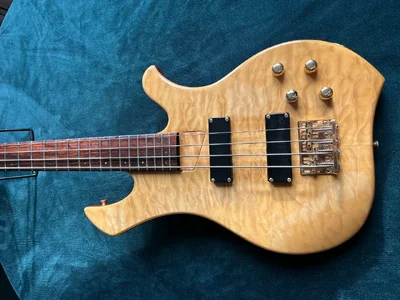
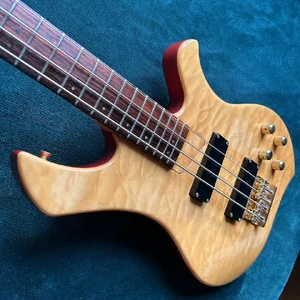
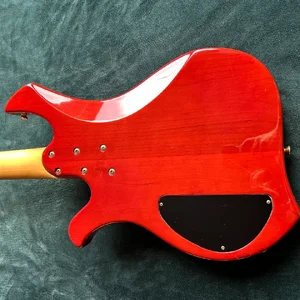
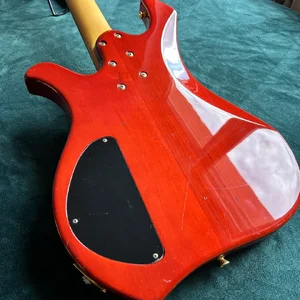
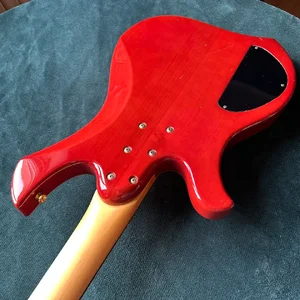
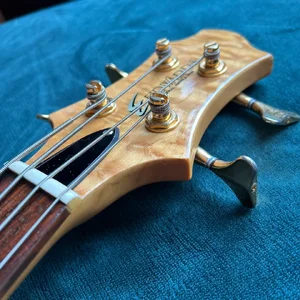
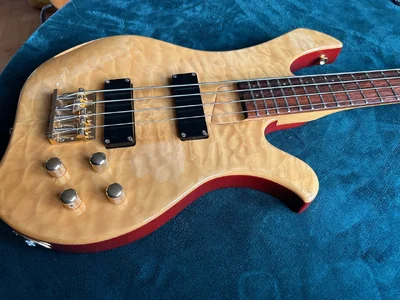
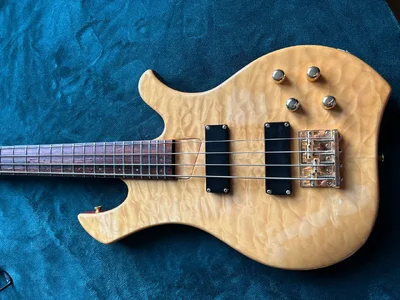
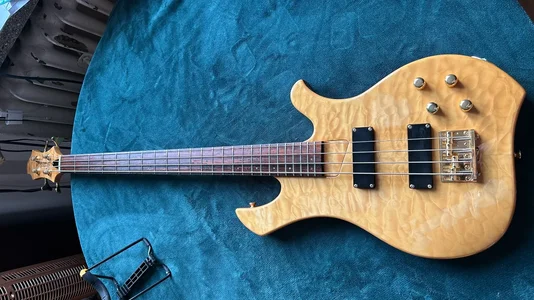
Quilted maple top, matching headstock veneer, gold hardware and a translucent red back – this bass makes an impression before you even plug it in. And there's an interesting story behind the shape.
tetsuya, bassist and leader of L'Arc~en~Ciel – one of Japan's best-selling rock bands – recorded on a US-made Zon Legacy Elite from the band's debut. In the late '90s ESP built him the ELT signature, clearly modelled on that boutique bass (a natural ELT appears in the 1998 "HONEY" video). Versions under ESP's sister brands followed, with the E-T-98EL being the top, Japan-made model among them. It was short-lived: due to the relationship with Zon, ESP discontinued the ELT in the mid-2000s, and once tetsuya later signed with Zon, basses of this shape disappeared for good. A rare sight in Europe.
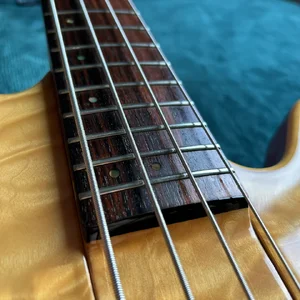
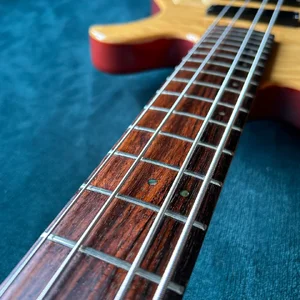
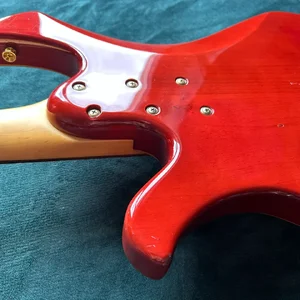
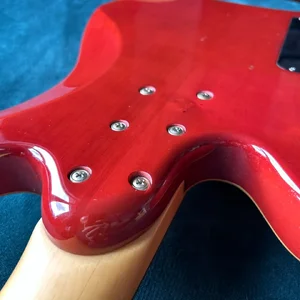
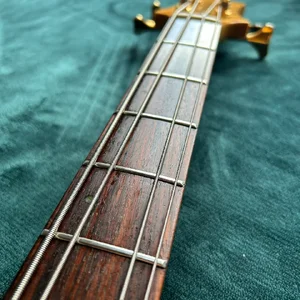
Bolt-on with six ferrule-mounted screws, alder body with a quilted maple top, maple neck, rosewood fingerboard, 24 frets, 34" scale; deep cutaways give easy access to the top frets. 43 mm nut. Weight: 4.0 kg.
Two passive soapbars with the original volume / balance / tone / tone layout – two independent tone controls offer more flexibility than you'd expect from a passive bass. The sound is strongly mid-focused with a distinct '80s flavour: great for rock, with a pick and with drive. Honestly, it's not a bass for high-register solos.
Superb build quality, from the fretwork to the tight neck pocket – Japanese craftsmanship under the ESP banner.
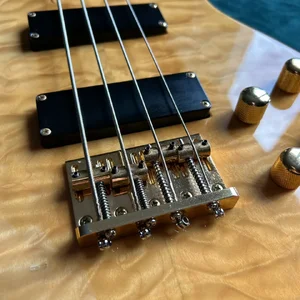
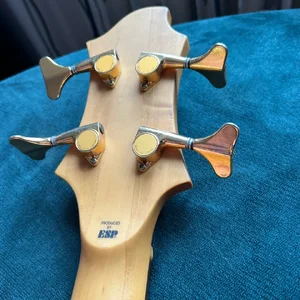
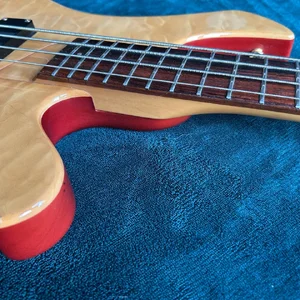
The bass has been played: finish dings on the body edges, especially at the back (incl. near the neck heel and the lower horn), scratches on the back, a scratched control cavity cover, two lacquer cracks on the headstock near the tuners (finish only, the wood is intact) and worn gold plating in places on the tuners and bridge saddles. The quilted top looks very good, with only a few minor marks. Technically everything is fine: the truss rod works very well, the frets were dressed in the past but have plenty left and need no work now. Action: 1.9–2.3 mm at the 12th fret.
Private sale. Can be tried out in Poznań, Poland; safe shipping from Poland is no problem.
Deutsch
Japanischer Signature-Bass von tetsuya (L'Arc~en~Ciel) – Edwards E-T-98EL, um die Jahrtausendwende, Quilted Maple und Goldhardware
Gequiltete Ahorndecke, passendes Kopfplatten-Furnier, Goldhardware und eine transparent rote Rückseite – dieser Bass beeindruckt, bevor er überhaupt eingesteckt ist. Hinter der Form steckt zudem eine spannende Geschichte.
tetsuya, Bassist und Bandleader von L'Arc~en~Ciel – einer der erfolgreichsten Rockbands Japans – nahm seit dem Debüt mit einem amerikanischen Zon Legacy Elite auf. Ende der 90er baute ihm ESP das Signature-Modell ELT, deutlich an diesen Boutique-Bass angelehnt (ein naturfarbener ELT ist im Video zu „HONEY" von 1998 zu sehen). Es folgten Versionen der ESP-Schwestermarken; der E-T-98EL war darunter das höchste, in Japan gefertigte Modell. Lange gab es ihn nicht: Wegen der Beziehung zu Zon stellte ESP den ELT Mitte der 2000er ein, und nachdem tetsuya später bei Zon unterschrieb, verschwanden Bässe dieser Form endgültig. In Europa selten zu finden.
Schraubhals mit sechs Schrauben in Hülsen, Erlekorpus mit gequilteter Ahorndecke, Ahornhals, Palisandergriffbrett, 24 Bünde, 34"-Mensur; tiefe Cutaways für bequemen Zugang zu den hohen Lagen. 43-mm-Sattel. Gewicht: 4,0 kg.
Zwei passive Soapbars mit originaler Schaltung Volume / Balance / Tone / Tone – zwei unabhängige Tonregler bieten mehr Möglichkeiten, als man von einem passiven Bass erwartet. Der Klang ist stark mittenbetont mit deutlichem 80er-Flair: ideal für Rock, mit Plektrum und Verzerrung. Ehrlich gesagt: kein Bass für Soli in hohen Lagen.
Hervorragende Verarbeitung, von der Bundierung bis zur passgenauen Halstasche – japanische Handarbeit unter dem ESP-Banner.
Der Bass wurde gespielt: Lackmacken an den Korpuskanten, besonders hinten (u. a. am Halsfuß und am unteren Horn), Kratzer auf der Rückseite, ein verkratzter E-Fach-Deckel, zwei Lackrisse an der Kopfplatte bei den Mechaniken (nur Lack, das Holz ist intakt) sowie stellenweise abgeriebene Vergoldung an Mechaniken und Brückenreitern. Die gequiltete Decke sieht sehr gut aus, mit nur wenigen kleinen Spuren. Technisch alles bestens: Der Halsstab arbeitet sehr gut, die Bünde wurden früher abgerichtet, haben aber noch reichlich Reserve und brauchen derzeit nichts. Saitenlage am 12. Bund: 1,9–2,3 mm.
Privatverkauf. Anspielen in Poznań (Polen) möglich; sicherer Versand aus Polen ist kein Problem.


