

- Angaben zum Versand
- 50 euro
- Artikelstandort
- Poznan, Polen
English
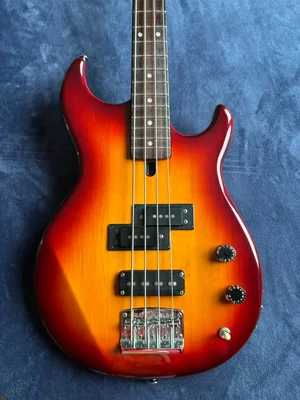
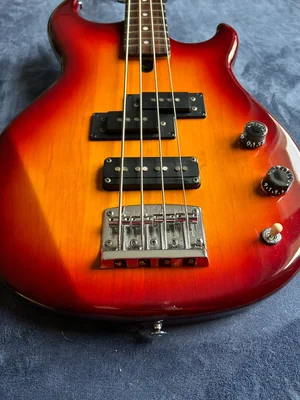
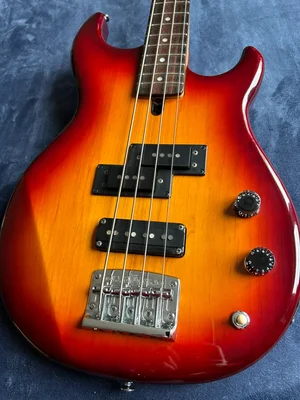
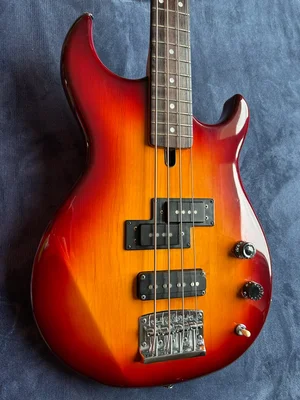
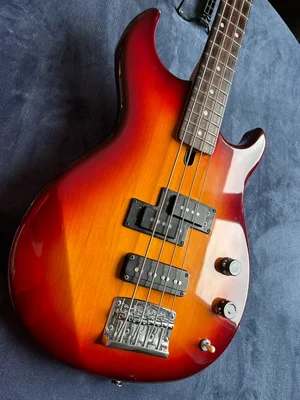
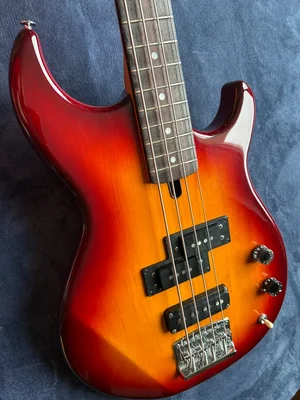
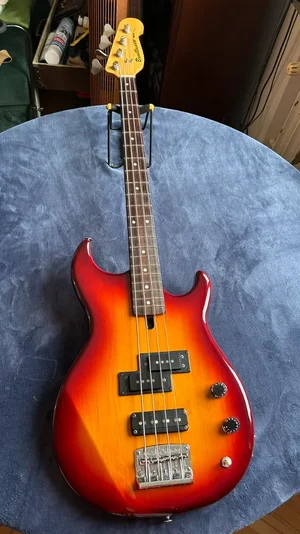
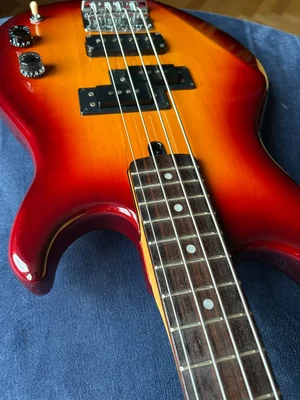
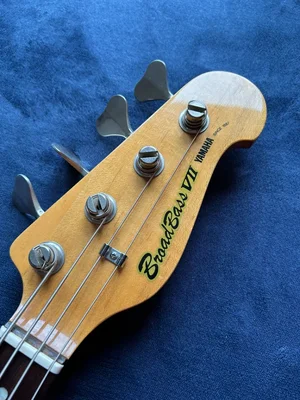
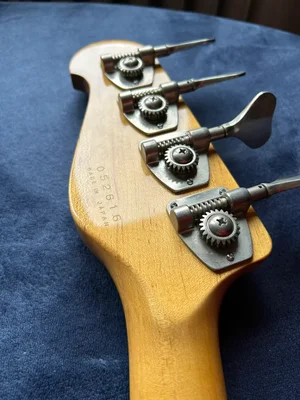
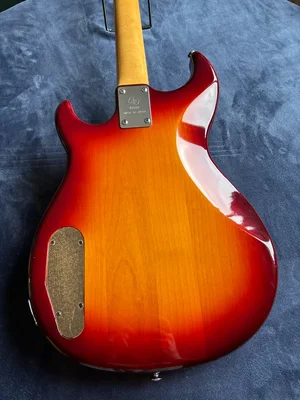
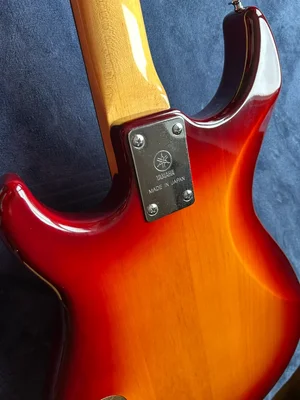
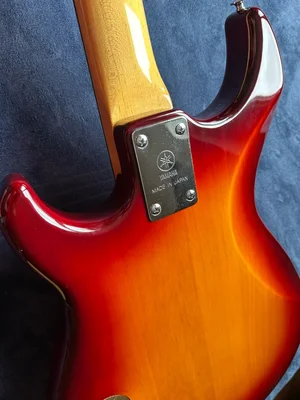
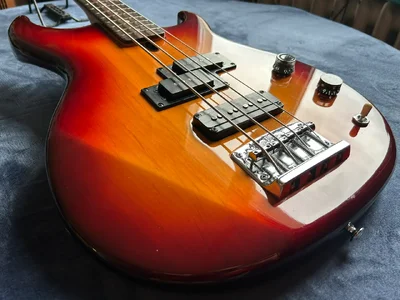
For sale: a Japanese Yamaha Broad Bass VII from the mid-’80s in cherry burst, one of the nicest finishes to come out of Hamamatsu at the time.
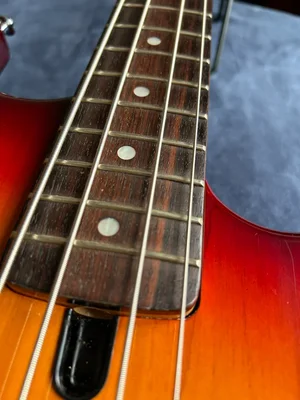
The BB-VII belongs to the series marked with Roman numerals. These were models built for the Japanese domestic market, positioned below the flagship BB2000 and BB3000. You get the full set of features designed for the pricier models, and build quality from an era when Yamaha simply didn’t go below a certain standard. Alder body, maple neck, and a very nice piece of rosewood on the fingerboard.
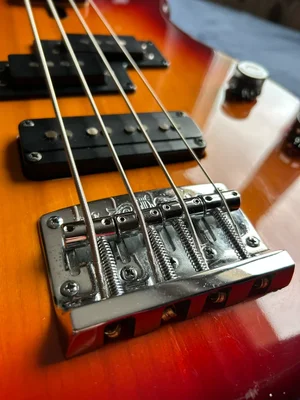
Two details are worth knowing. First, the split coil is mounted in reverse compared to Fender. Yamaha did this deliberately to even out the balance between the low and high strings. Second, the cast bridge has an extended distance between the saddle and the string anchor point, so the windings at the ball end don’t sit on the saddle. The PJ layout itself has a nice pedigree in the BB line: the first such Broad Bass was built as a prototype for Chuck Rainey, who used to add a Jazz Bass pickup to his Precision.
The sound is fairly hard-edged. The bridge pickup is strongly nasal, and the reversed P pickup nicely lifts the upper frequencies. This isn’t a soft, Fender-style P bass. It’s a bass that cuts into the mix with an edge. The electronics are quiet with good output, and the controls couldn’t be simpler: volume, tone and a three-way switch. Everything is original.
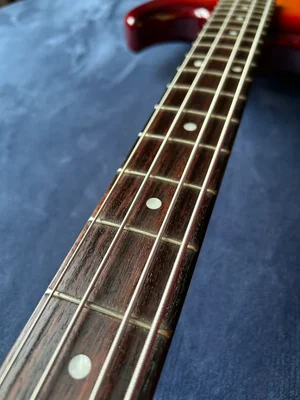
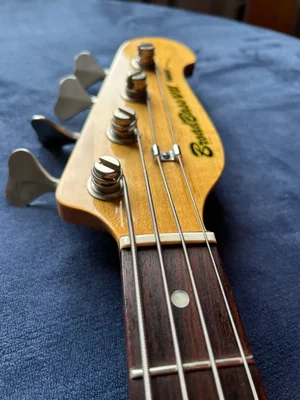
Ergonomically it’s very good. The nut is almost 43 mm, so the neck is wide, but the profile is a meaty rather than chunky C. Combined with the low action, it’s genuinely comfortable to play. String spacing is 19 mm, with a 10" radius, 34" scale and 21 frets. The weight is 4.3 kg, classic for the era, but the bass is well balanced.
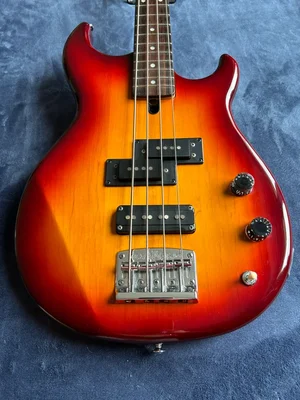
For a forty-year-old instrument, the condition is excellent. There are a few light scratches on the body near the bridge, and that’s it. The finish still shows the grain beautifully under the sunburst. The original protective film is still on the rear control cover; it’s yellowed and brittle, but still in place. The frets are tall with plenty of life left. The neck is straight, and the truss rod (adjusted at the body end, by the neck heel) works properly. Action is set at 1.8–2 mm at the 12th fret; any lower and some slight fret buzz appears.
Tweed hardcase included.
Private sale. The bass can be tried out in Poznań, Poland, and safe shipping from Poland is no problem.
Deutsch
Zum Verkauf: ein japanischer Yamaha Broad Bass VII aus der Mitte der 80er in Cherry Burst, einer der schönsten Farbtöne, die damals Hamamatsu verlassen haben.
Der BB-VII gehört zur Serie mit römischen Ziffern. Das waren Modelle für den japanischen Inlandsmarkt, unterhalb der Flaggschiffe BB2000 und BB3000. Man bekommt hier das volle Paket an Lösungen, die für die teureren Modelle entwickelt wurden, und eine Verarbeitung aus einer Zeit, in der Yamaha ein gewisses Niveau schlicht nicht unterschritt. Erlekorpus, Ahornhals und ein sehr schönes Stück Palisander auf dem Griffbrett.
Zwei Details sind wissenswert. Erstens ist der Split-Coil umgekehrt zu Fender eingebaut. Yamaha hat das bewusst so gemacht, um die Balance zwischen tiefen und hohen Saiten auszugleichen. Zweitens hat die gegossene Brücke einen vergrößerten Abstand zwischen Reiter und Saitenaufhängung, damit die Umwicklung am Ball-End nicht auf dem Reiter aufliegt. Die PJ-Bestückung hat beim BB übrigens einen schönen Stammbaum: Der erste Broad Bass dieser Art entstand als Prototyp für Chuck Rainey, der seinem Precision einen Jazz-Bass-Pickup nachrüsten ließ.
Der Klang ist ziemlich hart. Der Steg-Pickup klingt stark nasal, und der umgedrehte P-Pickup hebt die oberen Frequenzen schön an. Das ist kein weicher Fender-Preci, sondern ein Bass, der sich mit Kante in den Mix schneidet. Die Elektronik ist nebengeräuschfrei und liefert ein gutes Signal, und die Bedienung ist denkbar einfach: Volume, Tone und ein Dreiwegschalter. Alles ist original.
Ergonomisch schneidet er sehr gut ab. Der Sattel misst fast 43 mm, der Hals ist also breit, aber das Profil ist eher ein fleischiges als ein dickes C. Zusammen mit der niedrigen Saitenlage spielt er sich wirklich bequem. Der Saitenabstand beträgt 19 mm, bei 10" Radius, 34"-Mensur und 21 Bünden. Das Gewicht liegt bei 4,3 kg, klassisch für diese Ära, aber der Bass ist gut ausbalanciert.
Für vierzig Jahre ist der Zustand hervorragend. Am Korpus nahe der Brücke gibt es einzelne leichte Kratzer, das ist alles. Der Lack bringt die Maserung unter dem Sunburst nach wie vor wunderbar zur Geltung. Auf dem hinteren Elektronikdeckel klebt noch die originale Schutzfolie; sie ist vergilbt und spröde, aber immer noch an ihrem Platz. Die Bünde sind hoch und halten noch lange. Der Hals ist gerade, und der Halsstab (Zugang am Korpusende, am Halsfuß) arbeitet einwandfrei. Die Saitenlage ist auf 1,8–2 mm am 12. Bund eingestellt; darunter tritt Fret Buzz auf.
Tweed-Hardcase inklusive.
Privatverkauf. Anspielen in Poznań (Polen) möglich; sicherer Versand aus Polen ist kein Problem.

