M
mr.megabyte
Member
- Beiträge
- 34
- Bassix
- ß4.192


Folge dem Video um zu sehen, wie unsere Website als Web-App auf dem Startbildschirm installiert werden kann.
Anmerkung: Diese Funktion ist in einigen Browsern möglicherweise nicht verfügbar.
...Ich beneide dich!!!Ich war vor 1 1/2 Wochen in NY / Queens im Sadowskyshop sehr interessant (haben mir die ganze Produktion gezeigt)
Inzwischen hat der hellblaue auch seinen Hals wieder (nur ohne Bünde)
Der dicke Pöllmann Imperator hat Kuhknochen Zähne und eine Rosenhozzunge

Schöne Kombination irgendwo zwischen "Modern" und Vintage! Vom Sound gefallen mir die Morado/Rosewood Griffbretter besser, weil mir die Höhen sowieso oft zuviel sind.
Geht mir auch so - der Jazzbass hat sowieso genug Höhen. Nur habe ich den Eindruck, dass sehr viel mehr Sadowskys mit Maple-Board immer im Angebot sind....
...wichtig sind neben dem fingerboard aber auch andere komponenten wie der korpus. sumpfesche body und maple neck machen die badewanne extremer, noch mehr bässe und mehr höhen...
was da genauso zu bedenken ist, ist die Frage ob die Humcancelling oder die True Singlecoils verbaut wurden...
die Humcancelling haben weniger Präsenz in den Mitten als die Singlecoils.
Stimmt. Die Single haben mehr präsent knarzende Hochmitten als die drückenden Tiefmitten bei HC. IMHO
Ich hab hier noch das Zitat gefunden, das ich aber falsch in Erinnerung hatte:
Roger,
I have a quesiton that is very popular in the Sadowsky Club. Can you go over the sonic differences between the fretboard woods that you offer? In your opinion is fretboard choice key to final tone of a bass? Also do you support the use of 0000 steel wool to clean raw wood fretboards? -
This is my opinion, based on building over 4000 NYC basses during the last 30 years. From brightest to warmest.
Maple---tightest and brightest. best for slap. can produce more string and fret noise than others. Requires a finish to keep from turning dirty and grey.
Ebony--not as bright as maple. most immediate attack and punch of all our fingerboard woods. Note is more fundamental and less overtones. Best for fretless.
Morado Also known as Caviuna, Bolivian Rosewood or Pau Ferro. Although not a "true" rosewood, I have been a fan of this wood for fingerboards for 30 years. Also used a lot by Stu Spector. Grain is very tight and smooth. More warmth than maple or ebony, but tighter than East Indian Rosewood. Excellent wear resistance, even on a fretless. For fretless, produces a somewhat more "acoustic/upright tone than ebony.
Madagascar Rosewood A less expensive alternative to Brazilian Rosewood. Many boards have the spider-web like grain of Brazilian. Rich reddish brown colors. Can be more open grained that some others. Tone is the same ballpark as Morado and Brazilian.
Brazilian Rosewood For me, the King of tonewoods for fingerboards and acoustic guitar sides and backs. Beautiful browns and blacks. Wood has very high oil content. Banned from export out of Brazil in log form since 1969. Currently protected by the CITES treaty which prevents shipment between countries without intensive permits. Same treaty that protects tortoise shell and ivory.
I personally believe, IMHO opinion, that all things being equal, the fingerboard can have a bigger influence on the tone of the bass than the body wood.
Der neueste Schrei aus Lutetia sind Sadowsky Satin Serie Bässe aus NYC:
http://sadowsky.com/satin-series-basses/
Quasi chambered "NYC Metro" mit Grafitstäben im Hals.
Für den "arbeitenden Musiker" (am Fließband)...
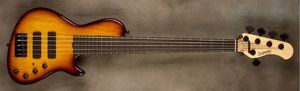
...übrigens - wie gefällt der Single Cut???